

Building a side hustle takes time. Generating income from it might take even longer. But if you are willing to put in the effort, it can become a rewarding way to earn beyond your regular salary.
Software engineers have an advantage here. They already possess skills that people and businesses are willing to pay for, whether it is programming, software development, cloud computing, or technical problem-solving.
And earning extra money does not always mean taking up another development job.
You could write about technology, teach others what you know, sell digital products, or offer your expertise to people who need it.
Here are seven side hustles for Software Engineers worth exploring
List of Best Side Hustles for Software Engineers
- Tech Blogging
- Starting a Tech Newsletter
- Selling Technical E-books
- Creating and Selling Online Courses
- Freelancing
- Technical Consulting
- Tech Content Creation
Now, let's look into each in a little detail.
1. Tech Blogging
If you enjoy writing and explaining technical concepts, starting a tech blog is worth considering.
You could write about programming languages, software development, cloud computing, AI, cybersecurity, or even your experience working with particular technologies.
However, there is one question that comes up quite often: Is blogging still worth it when AI tools can generate articles in seconds?
I think it is, but the approach needs to be different.
People are not necessarily looking for another generic explanation of Python or Kubernetes.
They want practical tutorials, solutions to problems they encounter while coding, real project experiences, and opinions from people who have actually worked with the technology.
That is something your experience as a software engineer can bring to a blog.
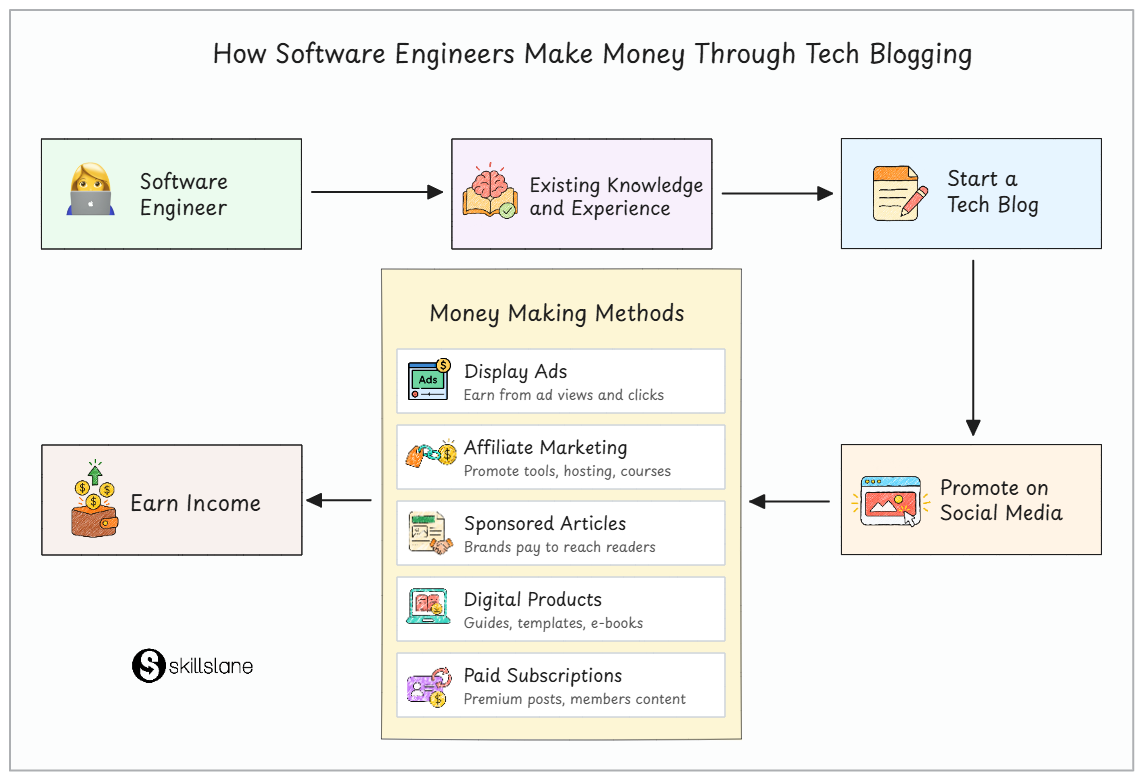
How Can Software Engineers Make Money Through Tech Blogging?
There are several ways to monetize a technical blog:
- Display advertisements: Earn revenue by displaying ads on your website. Your earnings generally depend on traffic, audience location, and advertising rates.
- Affiliate marketing: Recommend developer tools, hosting services, software products, and online courses through affiliate links.
- Sponsored articles: Collaborate with technology companies that want to promote their products to your readers.
- Selling digital products: Create and sell technical guides, templates, coding resources, and e-books.
- Paid subscriptions: Offer premium articles, exclusive tutorials, or members-only resources.
One interesting approach is to use a blog as a starting point for other income streams.
For example, an article about learning forward deployed engineering could introduce readers to a paid forward deployed engineer course or a downloadable project guide.
How Much Can You Earn Through Tech Blogging?
Blogging income varies considerably, and there isn't a reliable industry-wide figure specifically for software engineering blogs.
However, there are examples of technical creators who have built substantial businesses around their written content and expertise.
Niko Fischer, a developer and technical blogger, shared that his blog generates approximately €200-€400 per month.
He also discussed how his blog gradually attracted readers, affiliate revenue, and sponsorship opportunities.
It's a good example of how a technical blog can start generating income without necessarily becoming a full-time business.
Another interesting example is Chris Coyier, the developer behind CSS-Tricks. He built the website into a popular resource for frontend developers and ran it for 15 years, from 2007 to 2022, before selling it to DigitalOcean.
These examples show two different possibilities. You can build a blog that generates recurring income through monetization, or you can grow it into a valuable digital property over time.
2. Starting a Tech Newsletter
Not everyone wants to maintain an entire website or publish lengthy blog articles. If you prefer sharing information in shorter, regular updates, starting a newsletter might be a better option.
A tech newsletter is essentially an email publication where you share useful information with subscribers.
You could cover weekly developments in AI, programming tutorials, software engineering trends, new developer tools, or interesting industry updates.
For example, sending a weekly newsletter featuring five useful GitHub repositories, three new AI tools, and a short explanation of an important development in software engineering.
If readers find your content useful, they have a reason to keep opening your emails.
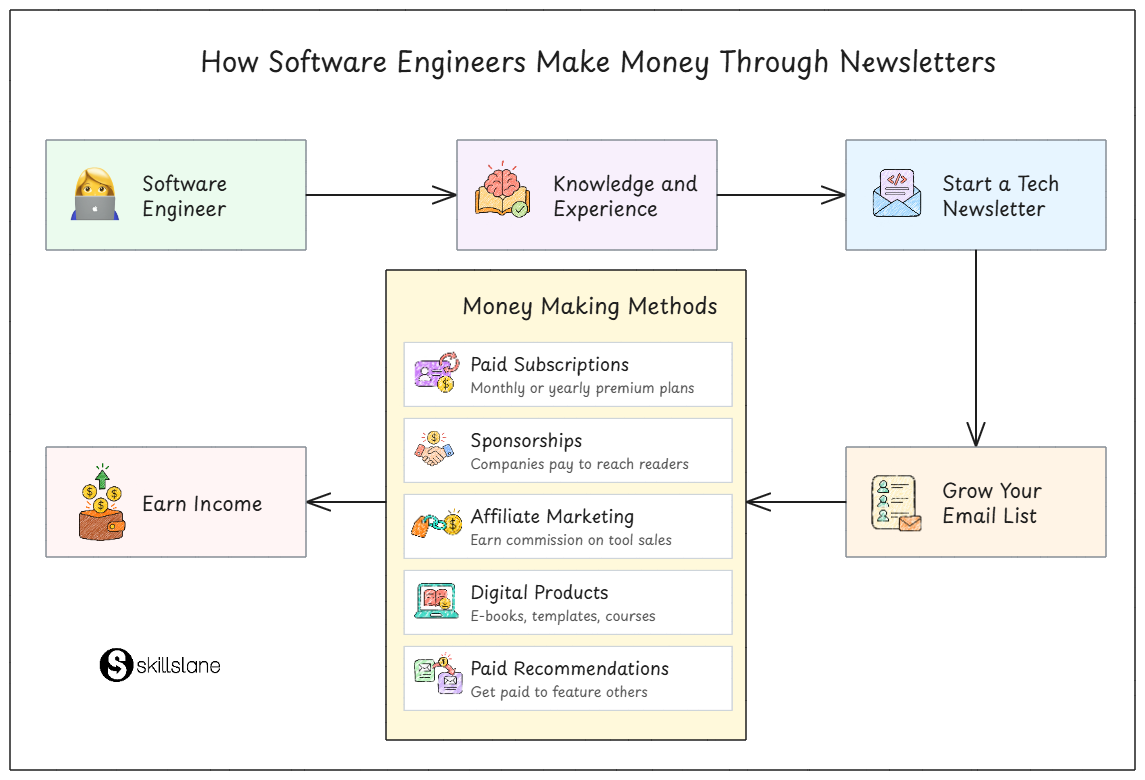
How Can Software Engineers Make Money Through Newsletters?
Newsletters offer several monetization opportunities:
- Paid subscriptions: Charge readers a monthly or annual fee for premium newsletters.
- Sponsorships: Feature advertisements from companies looking to reach your subscribers.
- Affiliate marketing: Share software tools or products you find useful and earn a commission when readers make a purchase through your links.
- Selling digital products: Create and sell your own e-books, templates, technical guides, or online courses to your readers.
- Paid recommendations: Get paid to feature or recommend other newsletters, products, or services in your emails.
An advantage of newsletters is that you build an email list.
Unlike social media followers, you have a direct communication channel with people who have chosen to receive your content.
How Much Can You Earn Through a Tech Newsletter?
A particularly interesting example is The Pragmatic Engineer, a technology newsletter created by software engineer Gergely Orosz.
An independent analysis published by Growth In Reverse reported that the newsletter had grown to more than 400,000 subscribers and generated over $1.5 million annually, primarily through paid subscriptions.
Another example is Lenny Rachitsky, a former software engineer and Airbnb product manager who built Lenny's Newsletter around product, growth, and technology.
In March 2023, the newsletter had more than 325,000 subscribers.
Rachitsky also said it was earning him significantly more than he had made as a product lead at Airbnb.
Both examples show how a newsletter can grow from sharing professional knowledge into a substantial business. However, these are exceptional success stories, not typical newsletter earnings.
3. Selling Technical E-books
If you have specialized knowledge of a particular technology, why not turn it into something people can purchase?
Selling technical e-books is another side hustle that you can consider.
You do not necessarily have to write a 300-page book. A well-organized guide that solves a specific problem can be valuable to someone trying to learn a new skill.
For example, you could create:
- A beginner's guide to Python programming.
- A practical guide to learning Docker.
- A Kubernetes interview preparation handbook.
- A system design interview guide.
- A collection of useful SQL queries.
- A guide to building your first full-stack application.
The advantage is that you create the product once and can sell multiple copies without having to work on each individual purchase.
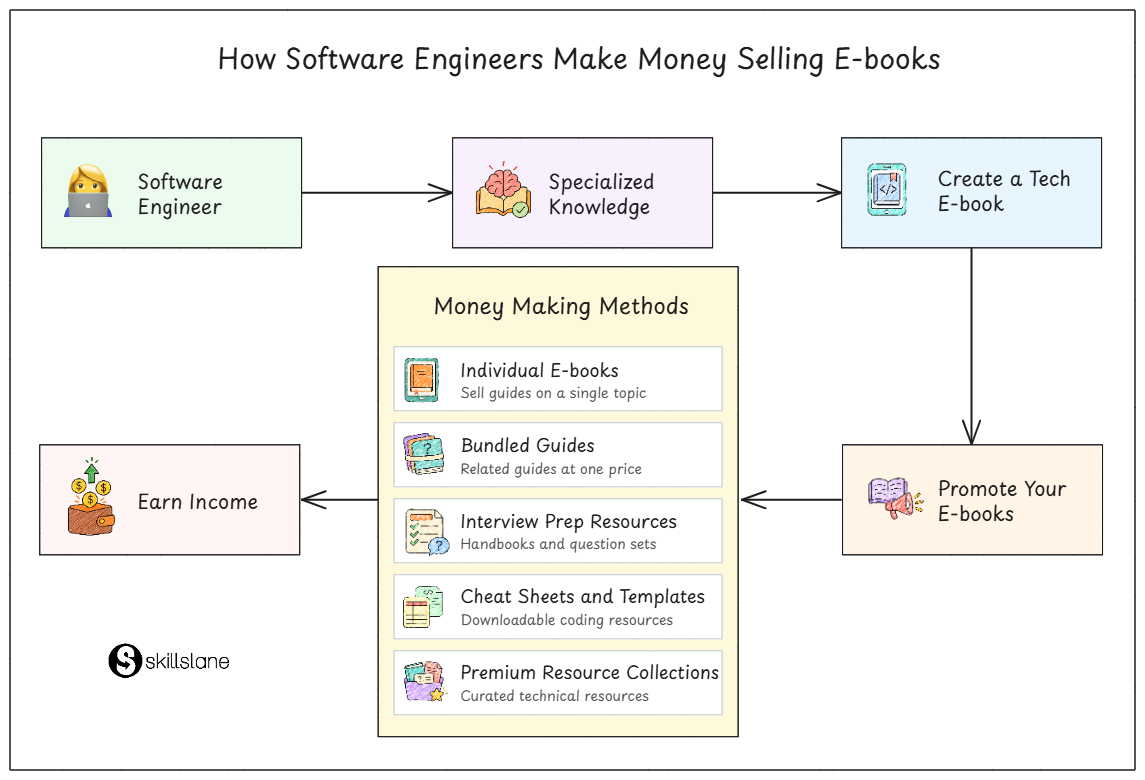
How Can Software Engineers Make Money Selling E-books?
You can monetize technical knowledge by creating downloadable products and selling them directly to your audience.
Some approaches include:
- Selling individual technical e-books.
- Creating bundles of related programming guides.
- Selling interview preparation resources.
- Offering downloadable cheat sheets and coding templates.
- Creating premium technical resource collections.
You can also use your blog, newsletter, LinkedIn profile, or YouTube channel to promote your products.
How Much Can You Earn Selling Technical E-books?
There are some impressive examples of developers who have made money by turning their technical knowledge into books.
Jeff Geerling, a software engineer and technical author, wrote Ansible for DevOps, a practical guide to automation and infrastructure management.
In a breakdown of the book's performance over ten years, he reported selling more than 87,000 copies and generating over $300,000 in revenue.
Another example is Gergely Orosz, author of The Software Engineer's Guidebook.
In a public breakdown of his book sales, he reported earning $611,911 in royalties over two years from approximately 40,000 copies sold across print, e-book, and audiobook formats.
These examples show that technical books can have a long earning life. You don't necessarily need to publish multiple books either.
A useful, well-written resource that solves a specific problem can continue attracting readers and sales long after its initial launch.
4. Creating and Selling Online Courses
Software engineers spend years learning programming languages, frameworks, tools, and technologies. Some of that knowledge can be turned into structured learning material.
Creating and selling online courses allows you to teach others what you already know.
For instance, if you know your way around AWS, you could put together a simple course for people who are just getting started with cloud computing.
If frontend development is your thing, you could teach React and walk learners through a few real projects.
The idea is to take something you understand well and break it down into lessons that someone else can follow.
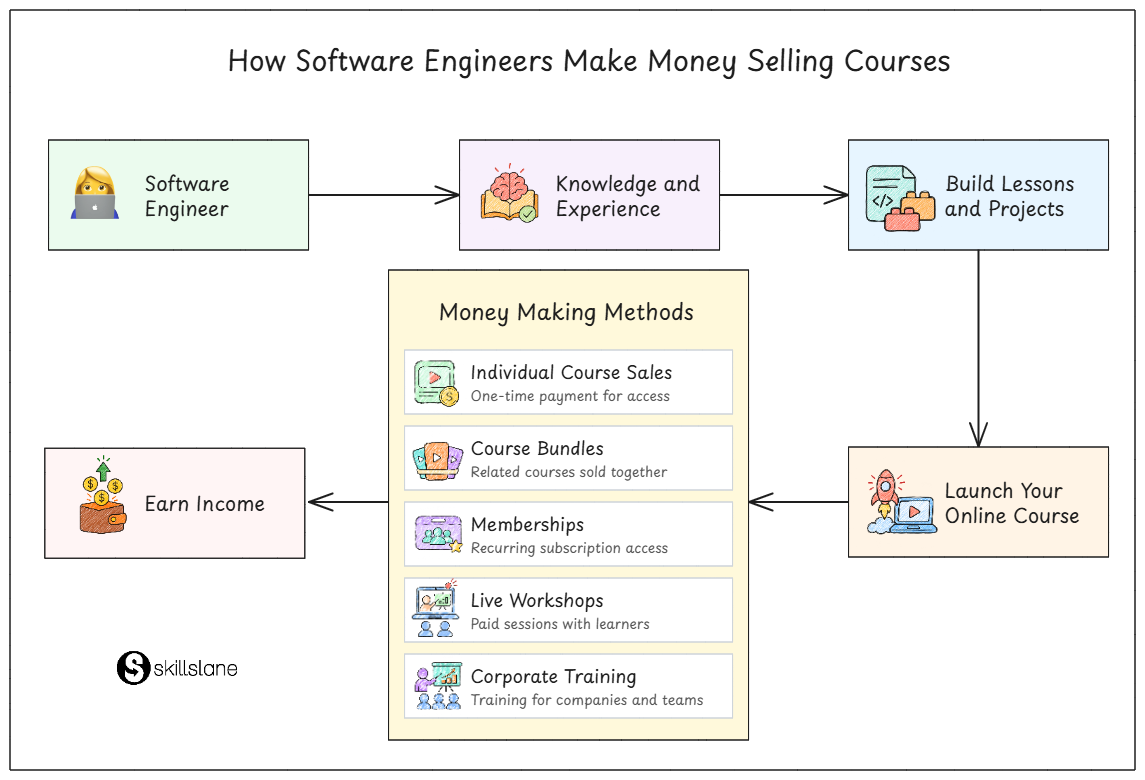
How Can Software Engineers Make Money Selling Courses?
There are several ways to monetize your technical expertise through online courses:
- Individual course sales: Create a course and sell access to it for a one-time payment.
- Course bundles: Combine multiple related courses and sell them together.
- Memberships: Offer access to a collection of courses through a recurring subscription.
- Live workshops: Conduct paid sessions where learners work on projects and interact with you.
- Corporate training: Offer specialized technical training to companies and development teams.
You can also start with free tutorials and gradually introduce paid courses once you understand what your audience wants to learn.
How Much Can You Earn Selling Online Courses?
There are some impressive examples of developers who have turned technical education into a business.
Josh Comeau, a frontend developer and educator, created CSS for JavaScript Developers, an online course designed to help developers understand CSS more deeply.
During its launch campaign in 2021, the course reportedly generated approximately $577,000 in pre-sales over a week.
Another example is Andrea Bizzotto, a software developer and educator known for his Flutter courses. His course Flutter Foundations generated more than $127,000 in revenue, with approximately $21,000 coming in during its first 24 hours of sales.
These examples highlight the earning potential of teaching technical skills through structured courses. However, the success of a course depends on more than just the subject.
The quality of the lessons, the problems they solve, and the audience you can reach all make a difference.
You don't have to teach everything you know. Pick one technology you're good at, create a course around it, and add more courses whenever you're ready.
5. Freelancing
If you prefer earning money directly from your technical skills rather than building an audience, freelancing is one of the more straightforward options.
As a freelance software engineer, you work with clients on specific projects without being employed by them full-time.
You could build websites, develop applications, fix bugs, create APIs, automate workflows, or help businesses implement AI solutions.
The advantage is that you can choose projects based on your existing skills and availability.
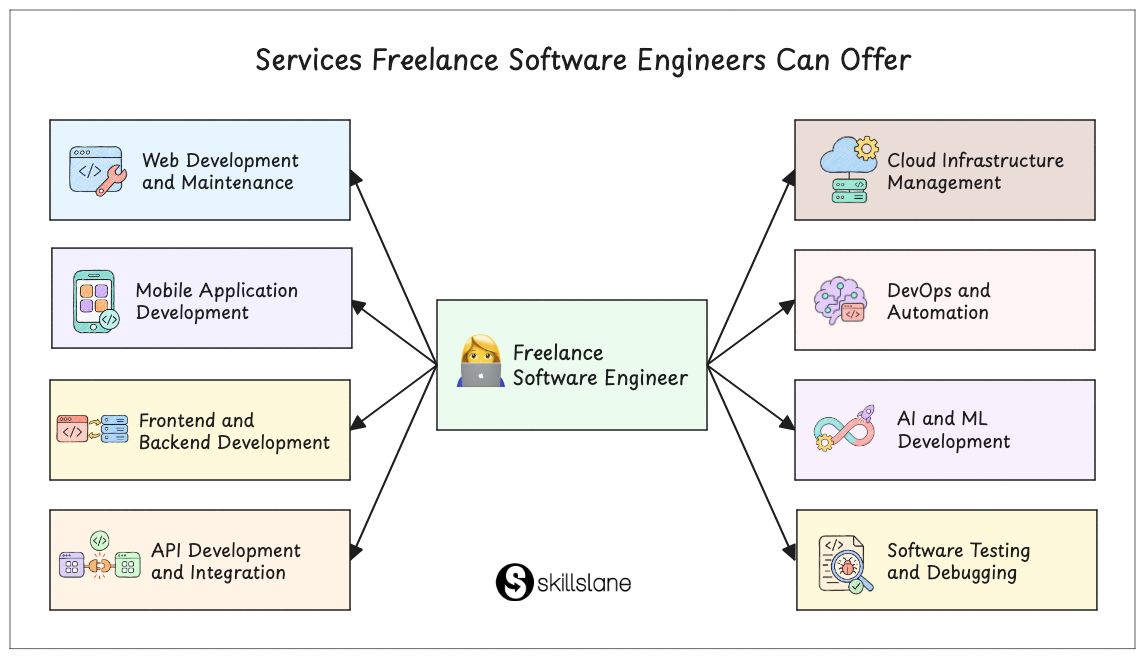
How Can Software Engineers Make Money Through Freelancing?
Some of the services you can offer include:
- Web development and website maintenance.
- Mobile application development.
- Frontend and backend development.
- API development and integration.
- Cloud infrastructure management.
- DevOps and automation.
- AI and machine learning development.
- Software testing and debugging.
You can charge clients either an hourly rate or a fixed project fee, depending on the nature of the work.
How Much Can You Earn Through Freelancing?
Your earnings depend on your experience, specialization, project complexity, and the clients you work with.
There are developers who have shared their own freelancing experiences publicly.
For example, Harkirat Singh, an Indian software developer, shared a video explaining how he earned approximately ₹40 lakh in three months through freelance software development on Upwork.
For someone starting out, the biggest challenge is often finding the first few clients and building a portfolio of completed projects.
Once you have client reviews and a track record, you have a better foundation for attracting projects and negotiating your rates.
6. Technical Consulting
Technical consulting is another option, particularly if you have considerable experience in a specialized area.
Unlike freelancing, where you are usually hired to complete a particular task, consulting involves helping someone understand a problem and decide how to approach it.
For example, a startup might need help choosing its cloud infrastructure. A developer preparing for a technical interview might want guidance from someone who has already worked in that area.
You could offer advice, review existing systems, recommend tools, or help people plan their technical careers.
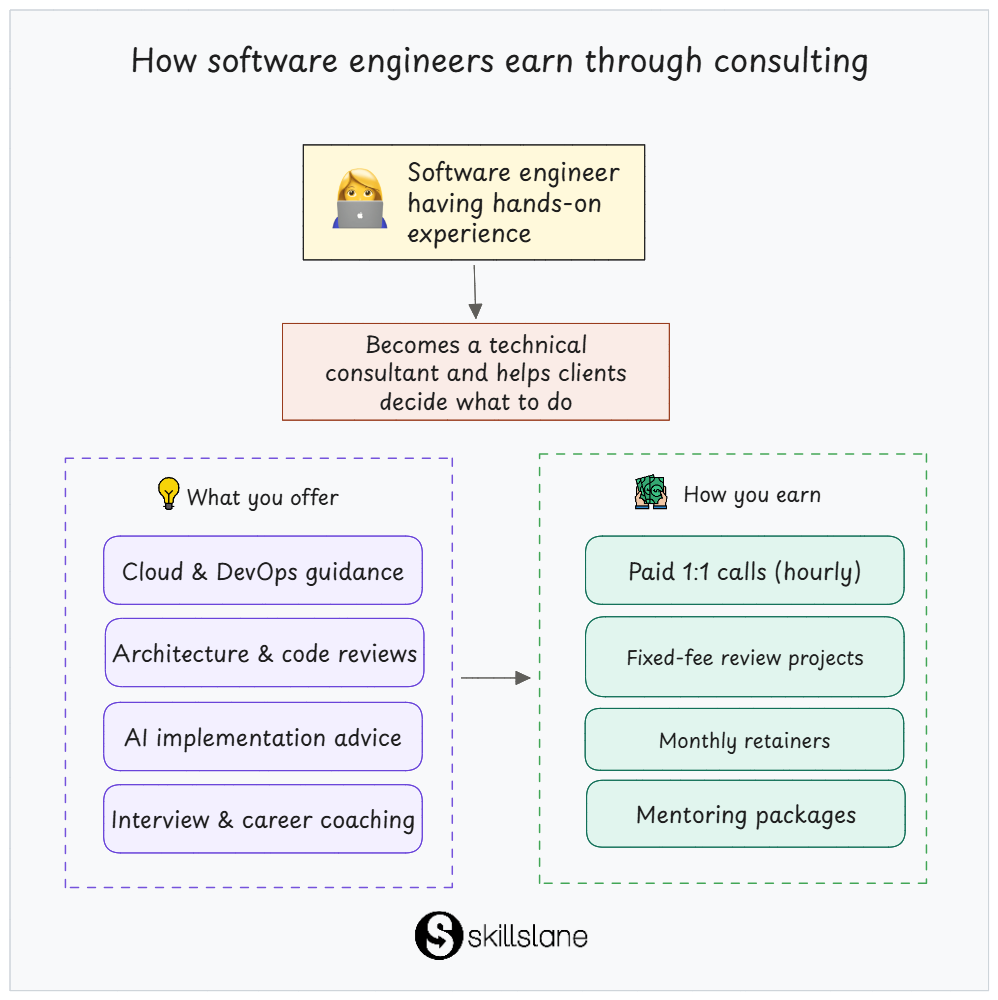
How Can Software Engineers Make Money Through Technical Consulting?
Some consulting opportunities include:
- Cloud architecture and infrastructure guidance.
- Software architecture reviews.
- DevOps and Kubernetes consulting.
- AI implementation recommendations.
- Code reviews and technical assessments.
- System design guidance.
- Technical interview preparation.
- Career guidance for aspiring software engineers.
You can charge per session, offer consultation packages, or provide longer-term advisory services.
How Much Can You Earn Through Technical Consulting?
Technical consulting income depends on your experience, specialization, the type of clients you work with, and the complexity of the problems you help them solve.
One example worth looking at is Assim ElHammouti, a software developer who started building a remote-first consultancy while working full-time. His consultancy generated approximately €72,000 in revenue during its first year and more than €100,000 in its second year.
Another well-known example is Martin Fowler, a software architecture expert and author. He became an independent consultant in 1991, advising organizations on software development and architecture before joining Thoughtworks.
While these examples represent different stages of consulting careers, they demonstrate how specialized technical knowledge can be turned into a paid service. Martin Fowler's is an established consulting career rather than a small side project.
You don't necessarily have to start by building a consultancy company. You can begin with individual advisory sessions, code reviews, architecture assessments, or technical guidance in an area where you have considerable experience.
7. Tech Content Creation
If you enjoy explaining technology but prefer videos or social media posts over writing lengthy articles, tech content creation is another side hustle to explore.
You could create programming tutorials, explain new technologies, review developer tools, share coding tips, or discuss your experiences as a software engineer.
You do not necessarily need expensive equipment or a professional studio to begin. You can start with screen recordings, simple demonstrations, and short educational videos.
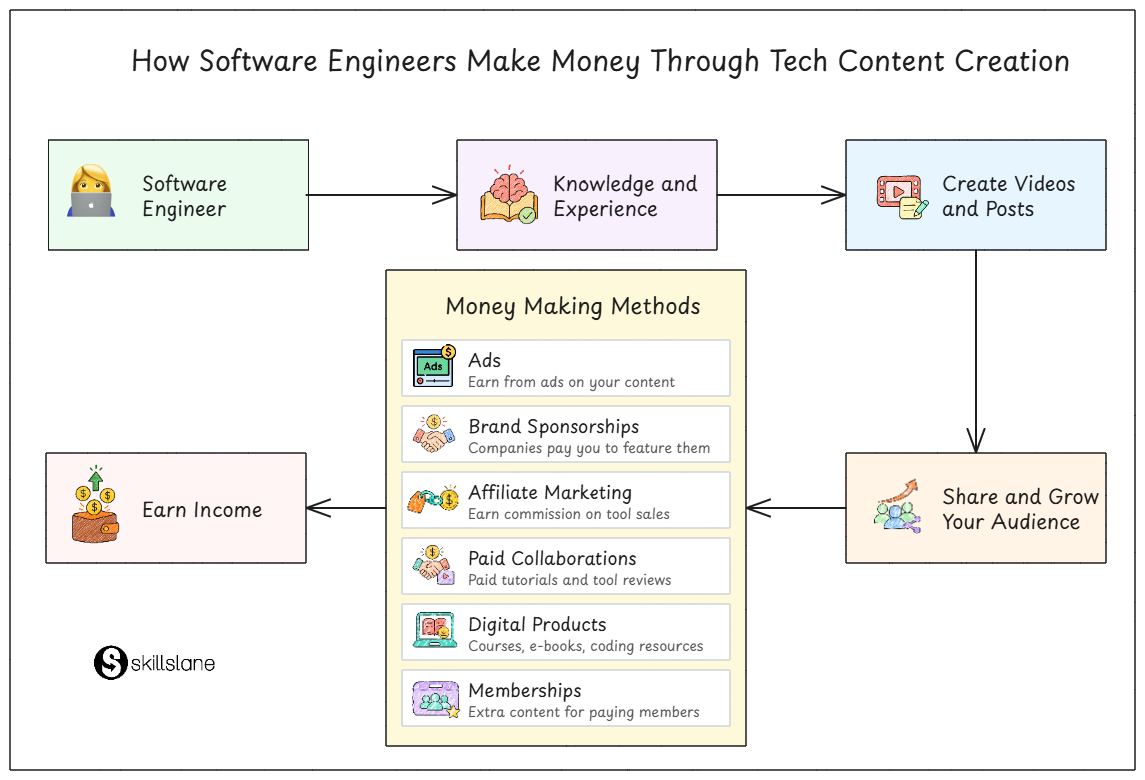
How Can Software Engineers Make Money Through Tech Content Creation?
There are quite a few ways to make money from your content:
- Ads: Earn money from ads shown on your videos or other content.
- Brand sponsorships: Work with tech companies that want you to talk about their products.
- Affiliate marketing: Share links to software, apps, and developer tools and earn a commission when someone buys through your link.
- Paid collaborations: Get paid to make tutorials, review products, or show people how a particular tool works.
- Selling digital products: Sell your own courses, e-books, and coding resources.
- Memberships: Offer extra content, tutorials, or learning materials to people who pay for a membership.
For example, if you regularly make videos about cloud computing, a company like AWS might be interested in working with you. You could also earn by recommending cloud computing courses or tools to your viewers.
How Much Can You Earn Through Tech Content Creation?
One example is Sundas Khalid, a Google employee and content creator who makes educational content about data science, technology, and career development.
In an interview with Business Insider, she shared that her content creation business generated approximately $302,000 in revenue in 2024.
She had more than 878,000 followers across social media platforms and spent around four to five hours a week on content creation alongside her full-time job. Brand partnerships accounted for most of her creator income.
Another example is Jeff Delaney, the developer behind Fireship, a popular YouTube channel focused on programming and software development.
He started the channel in 2017 without prior video production experience. In a creator walkthrough, he discussed growing it to more than 400,000 subscribers and generating a full-time income through his work.
Over time, the channel grew beyond YouTube videos. It also started offering developer courses and other products.
The money came from different places, such as brand deals, YouTube ads, affiliate links, and digital products. These earnings were shared by the creator and haven't been independently verified.
These examples show that content creation doesn't have to be just about earning from ads. As more people start following your work, you can find other ways to earn from the audience you've built.
Conclusion
There is no single side hustle that works for every software engineer. If you like writing, you could try starting a blog or newsletter. If teaching is more your thing, you could create courses or write e-books.
You could also take up freelance projects or offer consulting services using the skills you already have. One thing I would suggest is not trying to pursue all seven opportunities simultaneously.
Start with something that matches your existing strengths. Give yourself enough time to understand the audience, improve your offering, and figure out what people are actually willing to pay for.
As Steve Jobs said in his 2005 Stanford commencement address, "The only way to do great work is to love what you do."A side hustle should not become another job that leaves you exhausted.
Find something you genuinely enjoy working on, and give it the time it needs to grow.