
Cybersecurity is not really something you can learn by just sitting through lessons and memorizing terms.
At some point, you have to get your hands dirty and see how things actually work.
Depending on the kind of role you’re interested in, that could mean looking through network activity, figuring out what caused a security alert, testing a website for weaknesses, or helping a team deal with an attack.
That is also why choosing a cybersecurity course can get confusing.
Some courses are built for complete beginners, some are heavily hands-on, and others are designed around a specific career path such as penetration testing, security operations, or security architecture.
The need for these skills is not exactly going away.
The 2025 ISC2 Cybersecurity Workforce Study surveyed 16,029 cybersecurity professionals and decision-makers globally.
It found that 95% of respondents had at least one cybersecurity skills need in their organization, while 59% described their skills needs as critical or significant.
So, if you are planning to enter cybersecurity, switch into the field, or build on your existing IT skills, a good course can give you a much clearer starting point. You are not really learning one tool or memorizing a list of security terms.
You are building the ability to understand, identify, and respond to security problems.
With that in mind, I have picked seven cybersecurity courses and certifications worth looking at.
List of Cybersecurity Courses
- Udacity Security Architecture Planning and Design
- Udemy Cyber Security: From Beginner to Expert
- TryHackMe Cyber Security 101
- Cisco Networking Academy Introduction to Cybersecurity
- Microsoft Introduction to Microsoft Security, Compliance, and Identity
- TCM Security Practical Ethical Hacking
- Blue Team Level 1 (BTL1)
1. Security Architecture Planning and Design (Udacity)
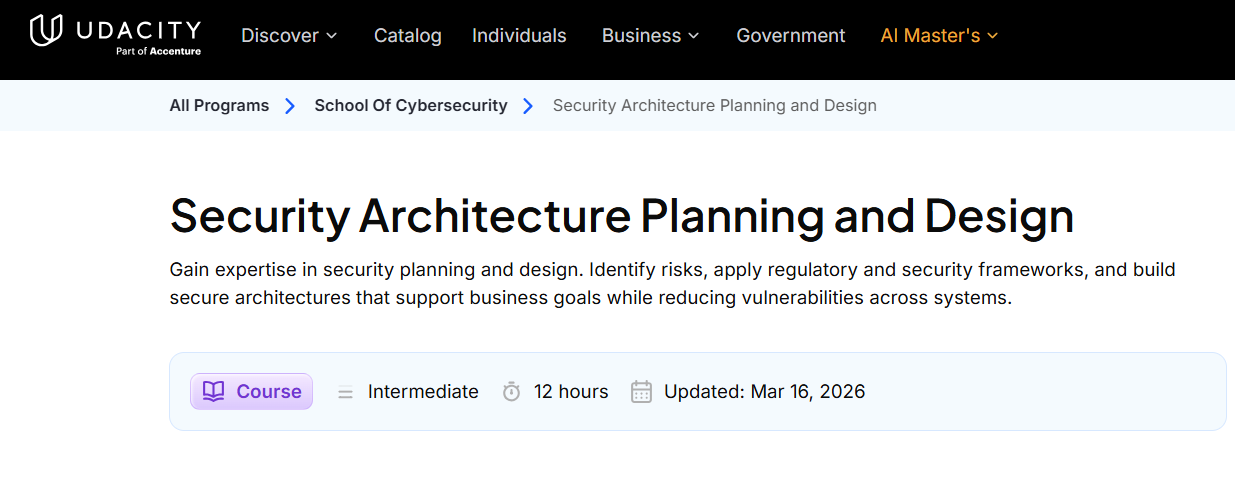
The final course on this list is quite different from the beginner-focused options above.
Udacity's Security Architecture Planning and Design is an intermediate course aimed at learners who already have some knowledge of cybersecurity, cloud computing, networking, and systems administration.
Instead of focusing primarily on attacks or security operations, the course looks at how to design systems with security in mind.
You learn to assess risks, apply security and regulatory frameworks, and design architectures that support business requirements while reducing vulnerabilities.
What You Will Learn
- You’ll learn how cybersecurity fits into a wider business context and why security decisions need to take business requirements into account.
- The course introduces cybersecurity risk management and shows how risks can be assessed as part of the system design process.
- You’ll learn about secure application architecture and the principles that can help make applications more resilient.
- The course covers security standards and frameworks and explains how they can be applied when evaluating systems.
- You’ll learn how to classify security risks and use that information when making security decisions.
- The program also introduces regulations and standards such as GDPR and PCI DSS.
- You’ll explore secure system design and learn how security can be considered during the architecture stage rather than added later.
- The course also covers application security reviews and governance, risk, and compliance.
There is also a practical project where you assess an existing architecture, identify risks and policy violations, and recommend a more secure design.
Course Details
Here’s a quick look at some of the main details of this course.
| Detail | Information |
|---|---|
| Level | Intermediate |
| Format | Online course with lessons and a practical project |
| Duration | 12 hours |
| Price | $249/month |
| Certificate | Program certificate available through Udacity's subscription offering |
Best Suited For: IT and cybersecurity professionals who want to move toward security architecture, risk management, and secure system design.
2. Cyber Security: From Beginner to Expert (Udemy)
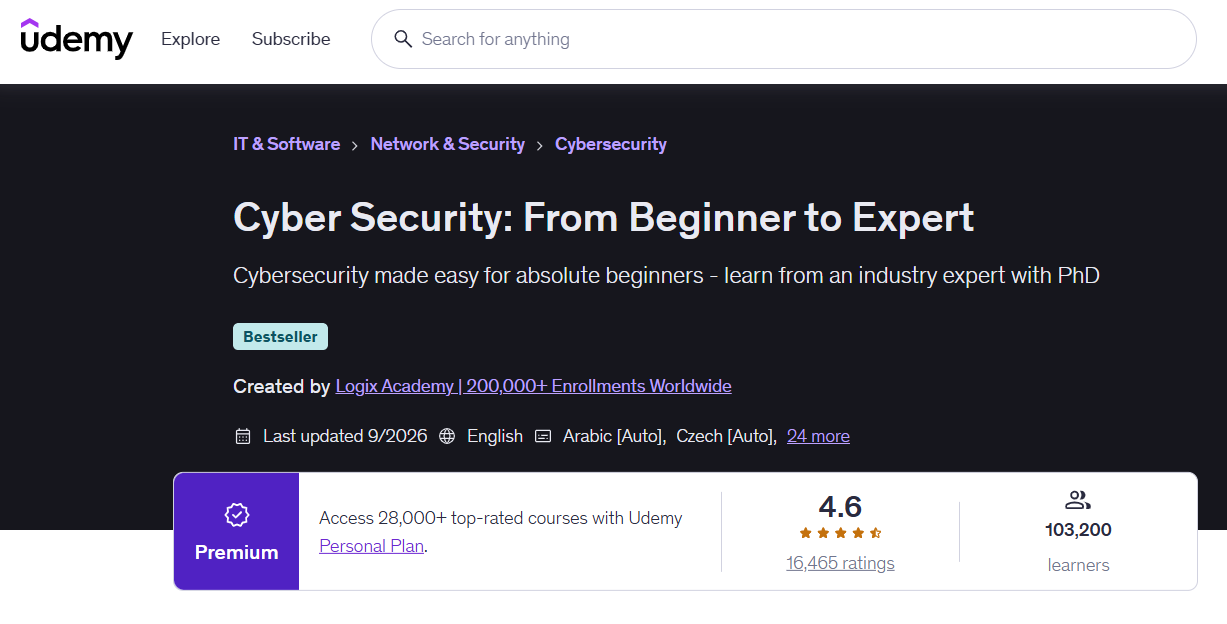
Udemy's Cyber Security: From Beginner to Expert is aimed at absolute beginners and takes a fairly broad approach to the subject. It was updated in September 2026 and includes hands-on labs, quizzes, and interview preparation.
The curriculum covers everything from security fundamentals and network security to web application security, malware, incident response, and network forensics. There is also a section on using generative AI for cybersecurity.
What You Will Learn
- You’ll start with cybersecurity foundations and learn about the basic concepts that form the foundation of the field.
- The course introduces security governance and explains how organizations approach security from a management and policy perspective.
- You’ll learn about network security and the different ways networks can be protected against attacks.
- The course covers cyberattacks so you can understand how attackers target systems and what defenders need to look out for.
- You’ll explore web application security and learn about common security weaknesses that can affect applications.
- The course also introduces malware and explains the role malicious software can play in cyberattacks.
- You’ll learn about incident response and intrusion detection as part of the process of identifying and responding to security events.
- The network forensics section introduces ways of examining network activity when investigating an incident.
- You’ll also get an introduction to identity and access management, governance, risk and compliance, and the use of generative AI in cybersecurity.
There are also more than 15 hands-on labs covering activities such as packet analysis, phishing investigation, port scanning, SQL injection, SNORT rules, and network forensics.
Course Details
In the table below, I’ve listed some of the basic details you may want to know before enrolling.
| Detail | Information |
|---|---|
| Level | Beginner |
| Format | Self-paced video course with quizzes and hands-on labs |
| Duration | 15 hours 34 minutes |
| Price | $139.99 |
| Certificate | Udemy certificate of completion |
Best Suited For: Beginners who want a broad, relatively short introduction to cybersecurity before moving into a specialization.
3. Cyber Security 101 (TryHackMe)
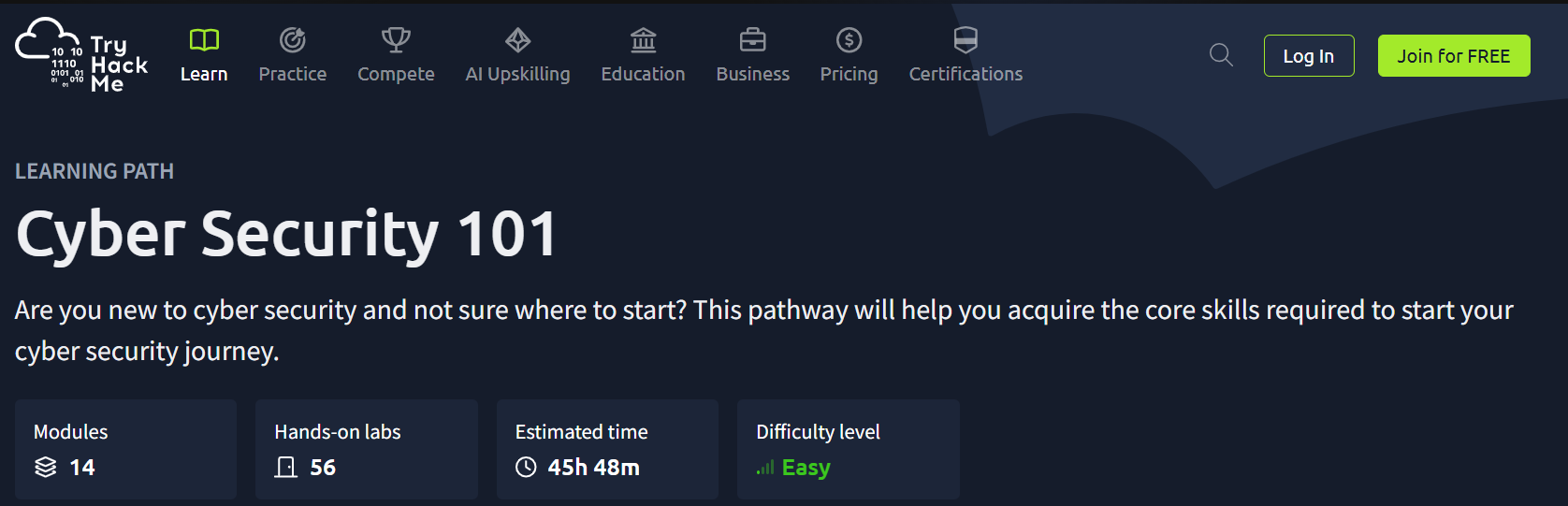
If you are completely new to cybersecurity and want to actually practice instead of spending all your time watching videos, TryHackMe's Cyber Security 101 is a strong place to start.
The learning path is designed to introduce beginners to both offensive and defensive cybersecurity.
It starts with the basics and gradually moves into areas such as Linux, Windows, Active Directory, networking, cryptography, exploitation, web hacking, defensive security, and security tools.
What I found particularly useful here is the range.
You are not forced to decide on day one that you want to become a penetration tester or SOC analyst. You get exposure to both sides of cybersecurity first, which can help you figure out what actually interests you.
What You Will Learn
- You’ll learn the fundamentals of Linux and Windows and understand how these operating systems fit into everyday cybersecurity work.
- You’ll get introduced to Active Directory and the way it is used to manage users, computers, and access within an organization.
- The course covers networking and network protocols so you can understand how systems communicate and where security problems can appear.
- You’ll learn how cryptography and hashing are used to protect information and verify data.
- You’ll get hands-on with exploitation techniques and tools such as Metasploit to understand how vulnerabilities can be used in an attack.
- The learning path also introduces web application security, including common vulnerabilities covered by the OWASP Top 10.
- You’ll work with tools such as Nmap, Burp Suite, and SQLMap while learning how security professionals use them.
- The defensive side covers SOC fundamentals, digital forensics, incident response, SIEM, firewalls, and intrusion detection.
The course is also very hands-on. TryHackMe runs its training through browser-based labs and practical exercises, so you can spend time actually working with security concepts rather than just reading about them.
Course Details
In the table below, I have listed some details about this course.
| Detail | Information |
|---|---|
| Level | Beginner |
| Format | Self-paced, hands-on browser labs |
| Duration | 45 Hours 48 Minutes |
| Price | Free |
| Certificate | Certificate of completion |
Best Suited For: Beginners who want a broad introduction to cybersecurity with plenty of hands-on practice.
4. Introduction to Cybersecurity (Cisco Networking Academy)
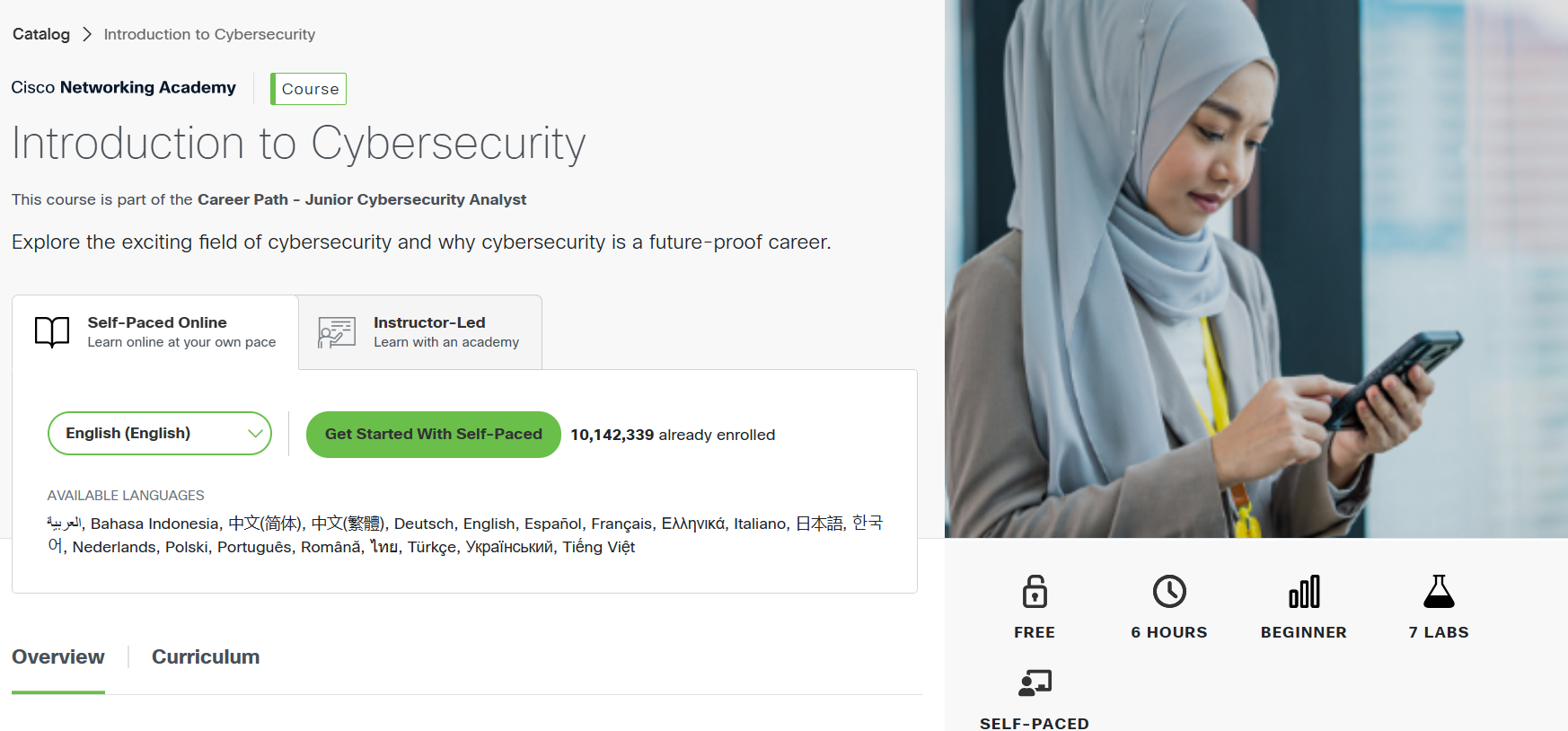
If you are looking for something much shorter and more beginner-friendly, Cisco Networking Academy's Introduction to Cybersecurity is worth considering.
The course is designed as an introduction to the field rather than a deep technical training program.
Cisco says it covers cybersecurity basics, common threats and vulnerabilities, protecting personal data and privacy, and how organizations protect themselves from cyberattacks.
What I like about this one is that it does not assume you already know what you want to specialize in. It gives you a broad look at cybersecurity and even introduces different career possibilities in the field.
What You Will Learn
- You’ll start by understanding what cybersecurity actually means and why protecting digital information has become important for individuals and organizations.
- You’ll learn about common cyber threats, attacks, and vulnerabilities and get an idea of how attackers can compromise systems.
- The course explains how you can protect your own devices, data, and online privacy from common security risks.
- You’ll also learn how organizations use different cybersecurity technologies and approaches to protect their operations.
- The course introduces legal and ethical issues in cybersecurity so you can understand the responsibilities that come with working in the field.
- You’ll also get an overview of cybersecurity careers and the different directions you can explore as you build more advanced skills.
Course Details
In the table below, I have listed some details about this course.
| Detail | Information |
|---|---|
| Level | Beginner |
| Format | Self-paced, online course |
| Duration | 6 hours |
| Price | Available for free through Cisco Networking Academy. |
| Certificate | Certificate of completion |
Best Suited For: Complete beginners who want a short, free introduction to cybersecurity before committing to more technical training.
5. Introduction to Microsoft Security, Compliance, and Identity (Microsoft)
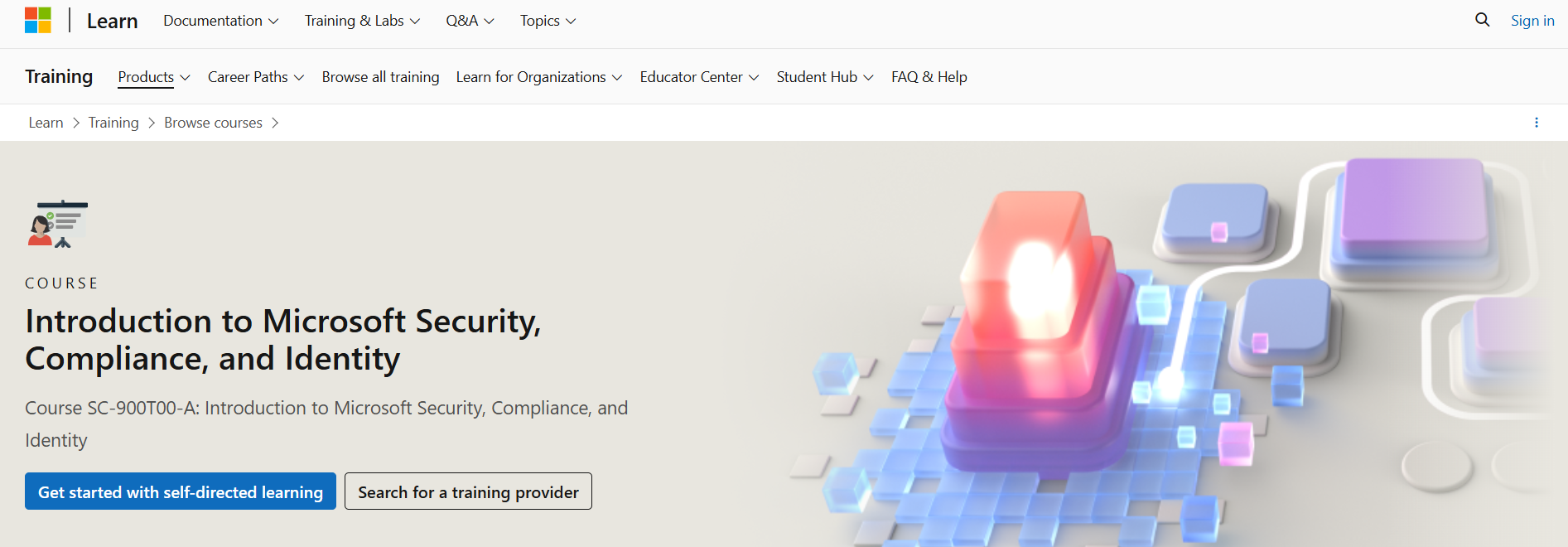
Microsoft's Introduction to Microsoft Security, Compliance, and Identity is another beginner-level course, but it approaches cybersecurity from a slightly different angle.
Rather than focusing mainly on ethical hacking or security tools, it introduces security, compliance, and identity concepts across Microsoft Azure and Microsoft 365.
This makes it pretty interesting if you already have some basic IT or cloud knowledge and want to understand how security fits into Microsoft's cloud ecosystem.
What You Will Learn
- You’ll learn the basic concepts behind security, compliance, and identity and how these areas work together in a modern IT environment.
- The course introduces Microsoft security solutions and shows how security capabilities are applied across Azure and Microsoft 365.
- You’ll learn how identity and access management fits into Microsoft's security approach and why controlling access is such an important part of protecting systems.
- The course also introduces compliance concepts and the role of Microsoft's cloud-based solutions in helping organizations meet security and regulatory requirements.
- You’ll get a broader understanding of how Microsoft approaches security across its cloud services rather than focusing on just one security tool.
Microsoft recommends that learners have a general understanding of networking and cloud computing, along with basic IT knowledge and some familiarity with Azure and Microsoft 365.
Course Details
In the table below, I’ve listed a few details that are useful to know before starting the course.
| Detail | Information |
|---|---|
| Level | Beginner |
| Format | Instructor-led or self-paced online training |
| Duration | 1 day |
| Price | Free |
| Certificate | Achievement code available |
The course is aligned with the objectives of Microsoft's SC-900 certification, but the course itself is the training component rather than the certification exam.
Best Suited For: Beginners with basic IT or cloud knowledge who want to understand security, compliance, and identity within the Microsoft ecosystem.
6. Practical Ethical Hacking (TCM Security)
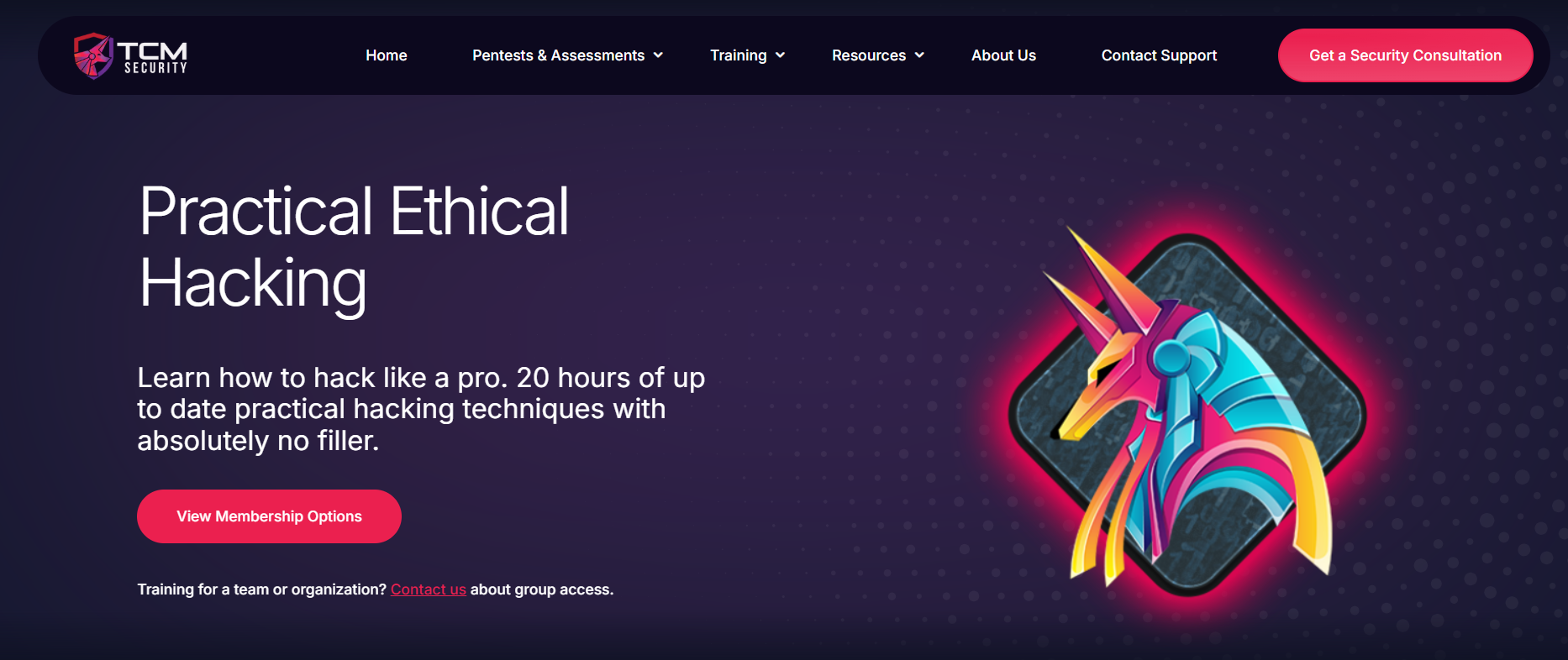
If your interest in cybersecurity is leaning toward penetration testing and ethical hacking, TCM Security's Practical Ethical Hacking course takes a much more hands-on approach.
TCM says no prior hacking knowledge is required, although basic IT, Linux, and programming knowledge is recommended. This is one of those courses where the curriculum gives you a good idea of what you are getting into.
It covers reconnaissance, scanning, enumeration, exploitation, Active Directory, web application penetration testing, wireless attacks, post-exploitation, and report writing.
What You Will Learn
- You’ll start with networking fundamentals and get familiar with Kali Linux and basic Python before moving into practical ethical hacking.
- You’ll learn how penetration testers approach an assessment, from reconnaissance and information gathering through to exploitation.
- The course covers scanning, enumeration, and vulnerability scanning so you can identify potential weaknesses in systems.
- You’ll work with exploitation tools such as Metasploit to understand how vulnerabilities can be exploited in controlled environments.
- You’ll learn about Active Directory attacks and how weaknesses in an organization's environment can be identified.
- The course also covers web application penetration testing and common vulnerabilities included in the OWASP Top 10.
- You’ll explore wireless attacks and post-exploitation techniques as part of the wider penetration testing process.
- You’ll also learn how to write penetration testing reports and communicate your findings clearly.
I particularly like that report writing is part of the course. Penetration testing is not just about finding a vulnerability. You also need to explain what you found, how serious it is, and what should be done about it.
Course Details
Here’s a quick look at some of the main details before you decide if this course fits what you’re looking for.
| Detail | Information |
|---|---|
| Level | Beginner |
| Format | Self-paced online course with hands-on labs |
| Duration | 20 hours |
| Price | $29.99/Month or $299.99/year |
| Certificate | Certificate of completion |
Best Suited For: Learners who want to explore ethical hacking and penetration testing through practical exercises.
7. Blue Team Level 1 (BTL1)
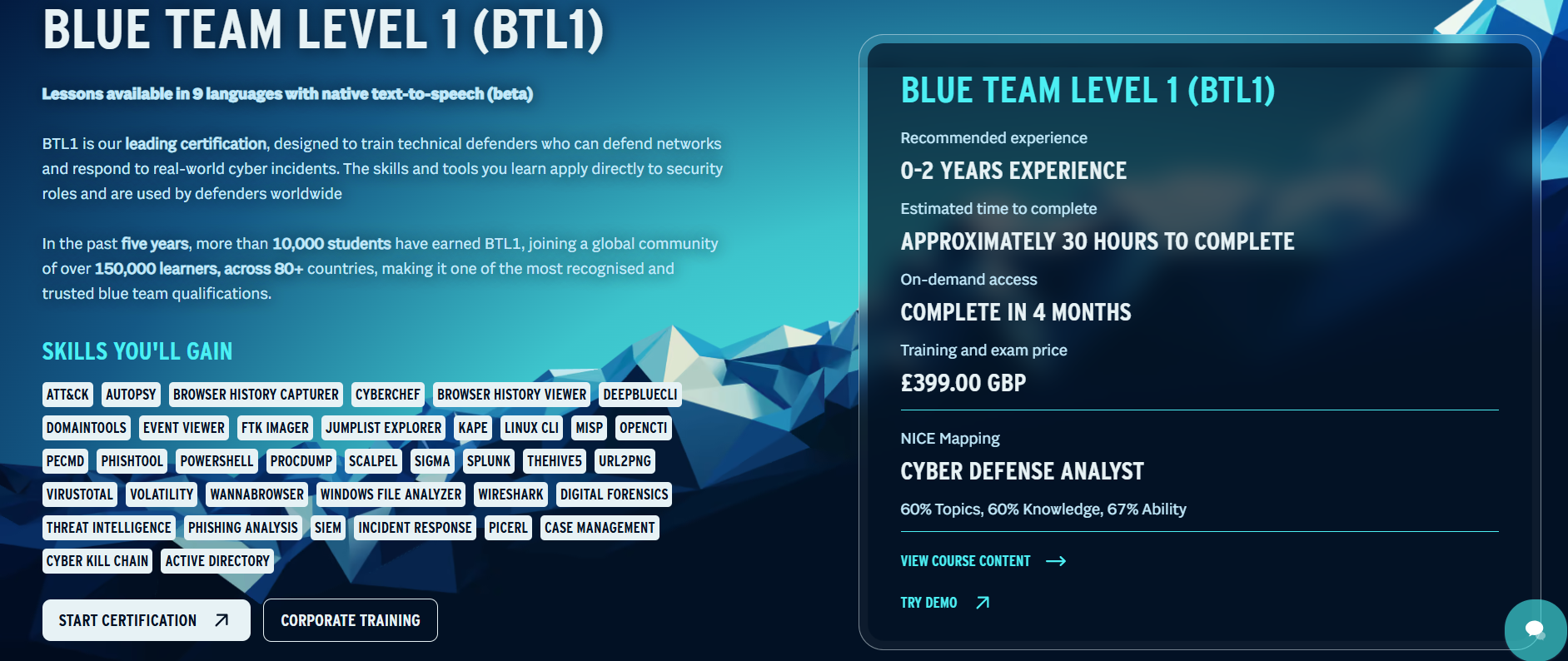
If TCM's course is focused heavily on the offensive side, Blue Team Level 1 takes you in the opposite direction. BTL1 is designed around defensive cybersecurity.
The focus is on detecting, investigating, and responding to real-world security incidents, which makes it particularly relevant to people interested in security operations, incident response, and digital forensics.
The training includes tools such as Splunk, Wireshark, Volatility, Autopsy, CyberChef, PowerShell, and several others. It also covers phishing analysis, threat intelligence, digital forensics, SIEM, and incident response.
What You'll Learn
- You’ll learn the fundamentals of defensive cybersecurity, including networking and Active Directory concepts that are useful when investigating security incidents.
- You’ll learn how to analyze phishing attempts and identify the signs that can help reveal malicious messages and links.
- The course introduces threat intelligence and shows how information about threats can support defensive security work.
- You’ll work with digital forensics concepts and learn how evidence can be examined after a security incident.
- You’ll also learn about incident response and the process of investigating and responding to security incidents.
In the table below, I’ve listed some of the practical details that are useful to know about BTL1.
| Detail | Information |
|---|---|
| Level | Junior |
| Format | On-demand training with browser labs and practical exam |
| Duration | Approximately 30 hours of training; 4 months of access |
| Price | 399 GBP |
| Certificate | BTL1 certification |
Best Suited For: Aspiring SOC analysts, incident responders, threat intelligence analysts, and other entry-level blue-team professionals.
Conclusion
After looking through these courses, one thing is pretty obvious to me: cybersecurity is too broad to approach as if there is one perfect course that teaches you everything.
And honestly, I think that is a good thing.
You can start with the basics and discover that you enjoy penetration testing. Or you might find yourself much more interested in figuring out what happened after an attack.
Someone else might enjoy working with security architecture and thinking about how an entire system should be designed before a problem ever occurs. That is why I would not pick a course simply because the name looks impressive on a CV.
I would first ask myself what kind of problems I actually enjoy solving. If I like breaking things and figuring out how they work, an ethical hacking course makes sense.
If I like investigation and finding patterns in messy information, the blue-team route could be a better fit.
And if I already have a technical background and want to think at the system level, security architecture is a completely different path.
There is also something else I would keep in mind. Finishing a cybersecurity course does not mean you are suddenly "done" learning cybersecurity. You probably never will be.
The tools change, the attacks change, and the ways organizations protect themselves keep changing too.
For me, that is actually one of the more interesting things about the field. You are not just collecting certificates and moving on.
The real value comes when you can take something you learned, sit down at a lab, investigate a problem, make a mistake, figure out why you made it, and try again.
So if you are choosing your first cybersecurity course, don't worry too much about finding the perfect one.
Find one that matches where you are right now, start learning, and give yourself enough room to discover which part of cybersecurity you actually want to pursue.
If you have any questions regarding these certifications, drop them in the comments.
I will be glad to help.